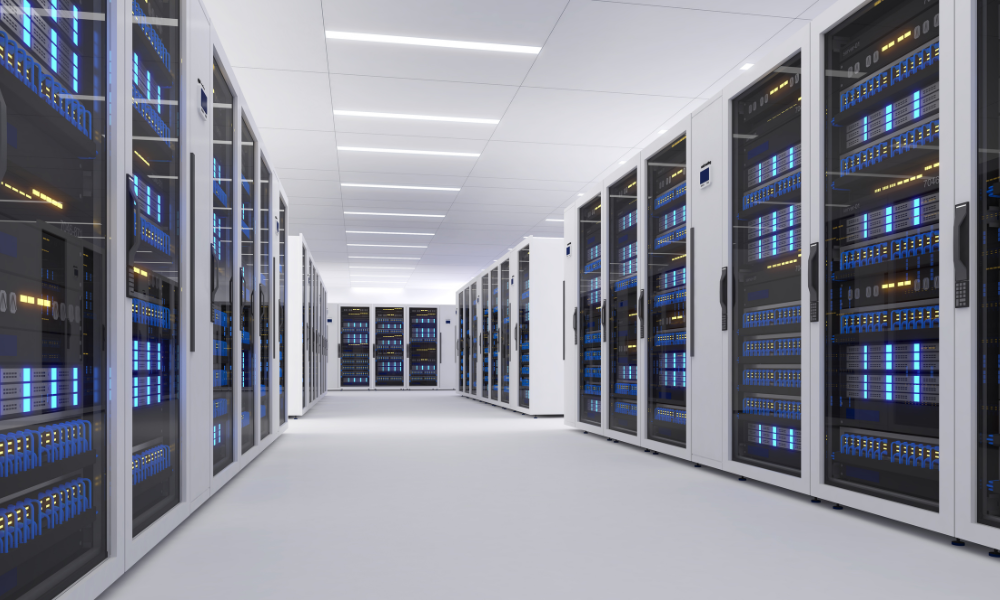
The IT equipment housed in data centers is the heart of modern society and business. This is where the software that runs the world lives—supporting everything from cloud computing and financial systems to healthcare, logistics, and artificial intelligence.
Data centers are critical because they support the growing demand for data storage, cloud services, and digital connectivity. They ensure reliability, security, and rapid access to information for businesses and users worldwide. As edge computing, IoT, and AI continue to expand, data centers are becoming even more essential to building scalable, efficient, and resilient digital infrastructure.
The rapid rise of artificial intelligence has dramatically accelerated both the size and density of data centers, increasing overall electrical demand. According to the International Energy Agency (IEA), electricity consumption from data centers and digital infrastructure is expected to grow significantly this decade, driven by cloud computing and AI workloads.¹ Roughly 40% of the energy consumed in a data center is typically used for cooling, according to the U.S. Department of Energy (DOE).2
High-performance computing chips are extremely sensitive to heat and must operate within controlled thermal conditions to operate reliably.³ As data centers become larger energy consumers, power quality becomes mission critical. Poor power quality reduces equipment efficiency, accelerates wear and tear, and increases the risk of unexpected downtime. The National Institute of Standards and Technology (NIST) highlights that power disruptions present significant operational risks for critical facilities and stresses the importance of robust resilience planning to maintain operations.⁴
Below are four critical areas where maintaining power quality is essential in modern data centers.
. Building HVAC Systems
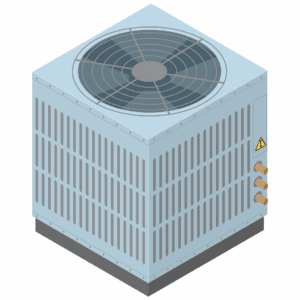
Central HVAC systems—such as chillers, cooling towers, and large pumps—play a major role in maintaining data center temperature and humidity. These systems commonly rely on Variable Frequency Drives (VFDs) and Electronically Commutated (EC) fans to improve efficiency and enable precise control.
While VFDs and EC fans reduce energy consumption, they also introduce electrical harmonics into the power system. If left unmanaged, harmonics can cause overheating of transformers and conductors, nuisance tripping of protective devices, and interference with sensitive electronic equipment. In some cases, these disturbances can extend beyond the data center itself, affecting neighboring facilities connected to the same electrical infrastructure.
Maintaining power quality at the building HVAC level is essential to ensure cooling systems operate reliably without compromising overall facility performance.
. Server Rooms
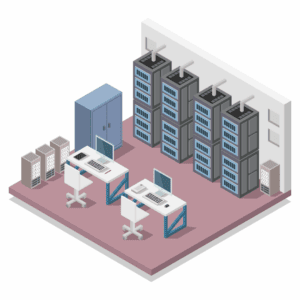
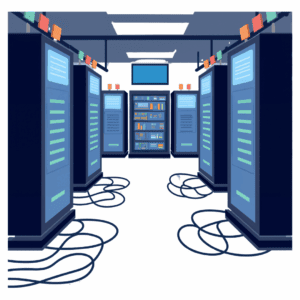
Server rooms—often referred to as server halls or data halls in larger facilities—house the core IT infrastructure, including servers, storage systems, networking equipment, and power distribution components.
Cooling within these spaces is typically provided by Computer Room Air Conditioners (CRACs) and Computer Room Air Handlers (CRAHs). These units rely on fans, pumps, compressors, and electronic controls, many of which use VFDs, EC fans or other non-linear loads that can introduce harmonics and electrical noise.
Without proper power quality management, these disturbances can disrupt sensitive IT equipment, reduce cooling reliability, and increase the likelihood of failures in the most critical areas of the data center.
. Rack Enclosure Rows
Within server halls, rack enclosure rows are designed to manage airflow efficiently by separating hot and cold aisles. Air handlers or fan wall systems are used to remove hot exhaust air and deliver conditioned air back to the server intakes.
These systems often operate continuously and rely on multiple high-speed fans and control systems. The cumulative electrical impact of these devices can contribute to harmonic distortion, voltage instability, and additional stress on upstream electrical infrastructure.
Ensuring clean, stable power at this level helps maintain consistent airflow, supports higher rack densities, and protects both cooling and electrical equipment.
. Server Racks
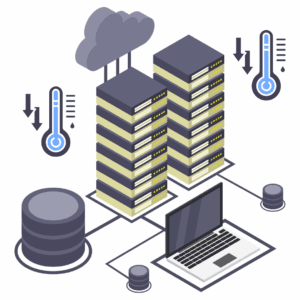
At the rack level, traditional servers rely on internal fans to remove heat. However, next-generation AI and GPU-based servers generate significantly more heat than conventional systems—often exceeding the practical limits of air cooling.
To address this challenge, many data centers are adopting liquid cooling solutions such as direct-to-chip cold plates or full immersion cooling. These designs rely on pumps inside of Cooling Distribution Units (CDU) controlled by VFDs to circulate coolant between server racks and external heat rejection systems.
While highly effective, the required VFDs in the CDUs introduce additional electrical loads and power quality degradation. Any disruption to power quality at this level can directly affect cooling performance, server reliability, and overall uptime. Without proper cooling, the GPUs can quickly become damaged due to excessive heat levels.
Power Quality Is Foundational to Data Center Reliability
As data centers evolve to support AI, higher rack densities, and advanced cooling technologies, the electrical environment becomes more complex—and more vulnerable. Power quality issues such as harmonics, voltage distortion, and electrical noise can cascade across multiple systems, undermining efficiency, reliability, and availability.
Proactively addressing power quality across HVAC systems, server rooms, rack rows, and individual server racks is essential to maintaining uptime, extending equipment life, and protecting critical digital infrastructure.
In an always-on digital economy, power quality is not optional, it’s foundational!
Learn more about MTE’s solution to mitigate harmonics in Data Centers: SyntriX AHF™!
- International Energy Agency. Electricity 2024: Analysis and Forecast to 2026. IEA, 2024.
- S. Department of Energy. Energy Efficiency in Data Centers. DOE, 2022.
- Lawrence Berkeley National Laboratory. Data Center Energy and Thermal Management Research. LBNL, U.S. Department of Energy.
- National Institute of Standards and Technology. Resilience for Critical Facilities (NIST Grant/Contractor Report GCR 23-037). NIST, 2023.